Hidden profile, visible history
Models recover decision-relevant preferences from prior interactions rather than receiving a structured persona directly.
UserToolBench tests whether an LLM can infer stable user preferences from interaction history, decide when clarification is needed, and produce executable user-aligned tool-call trajectories under incomplete information.
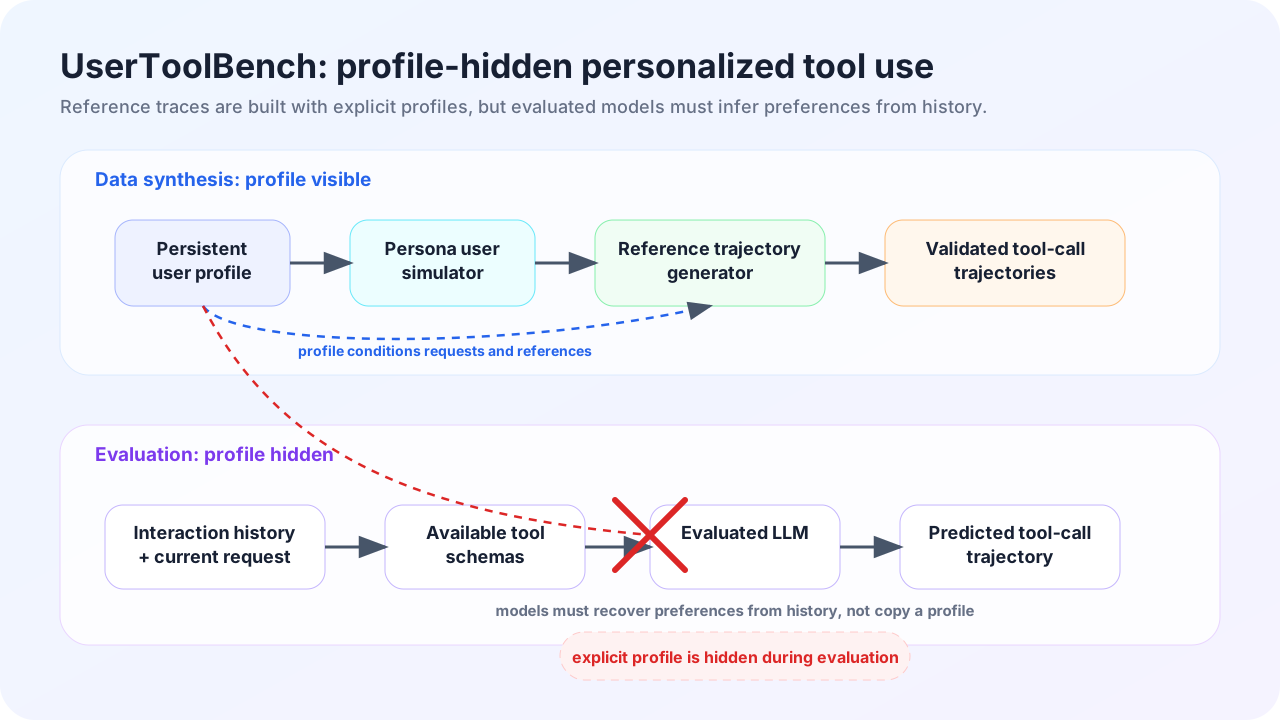
Reference trajectories use a sanitized persistent profile. Evaluated models see only history, the current request, and tool schemas.
A helpful assistant must do more than imitate a user's tone. It must choose tools, fill arguments, ask the right clarification questions, and coordinate multi-step actions in a way that remains consistent with the user's established behavior.
Models recover decision-relevant preferences from prior interactions rather than receiving a structured persona directly.
Evaluation focuses on tool choice, argument values, clarification behavior, and trajectory structure.
Relevant signals can be distributed across earlier topics, requiring selective retrieval rather than indiscriminate memory use.
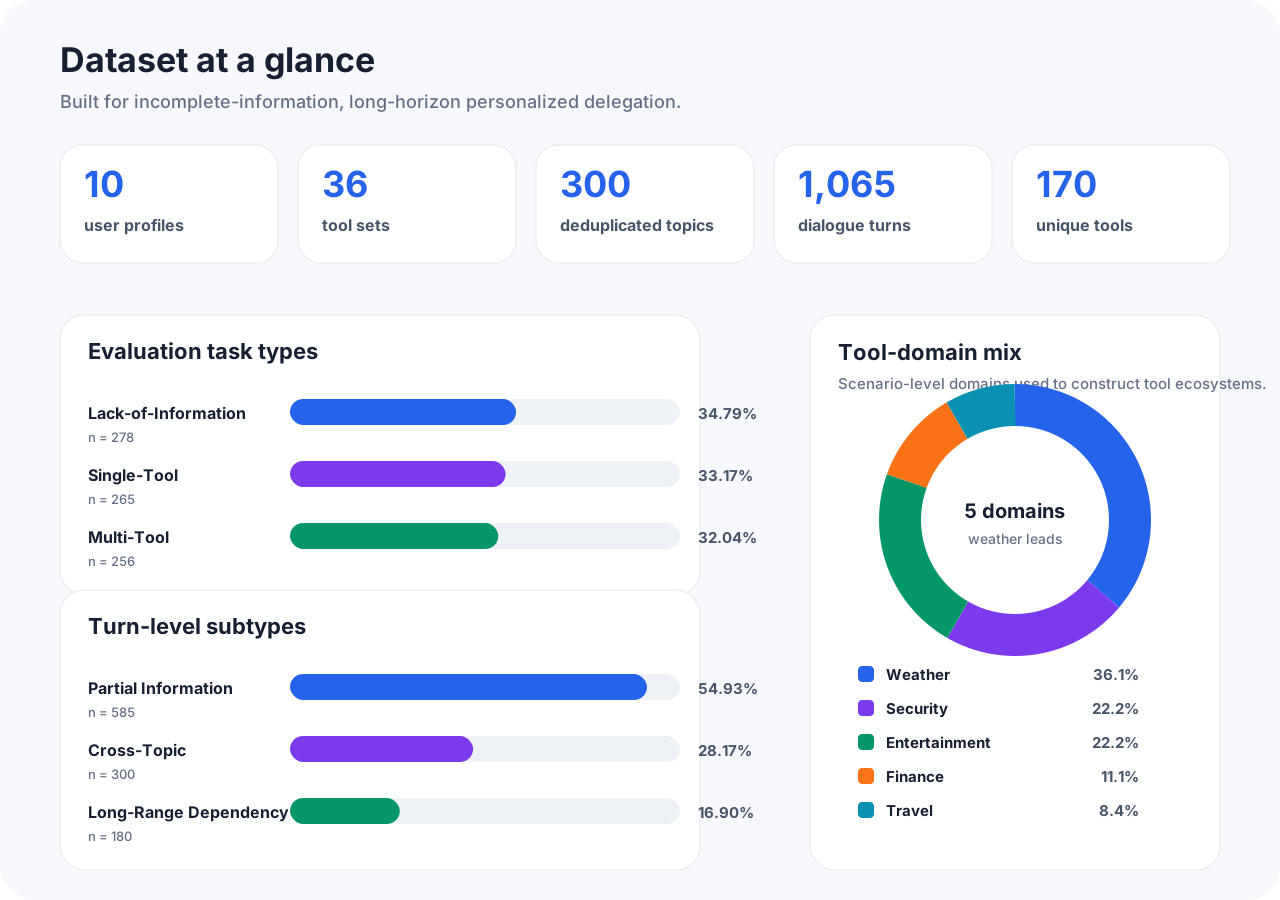
UserToolBench combines privacy-sanitized profiles, public API-style tool ecosystems, and multi-turn trajectories across lack-of-information, single-tool, and multi-tool settings.
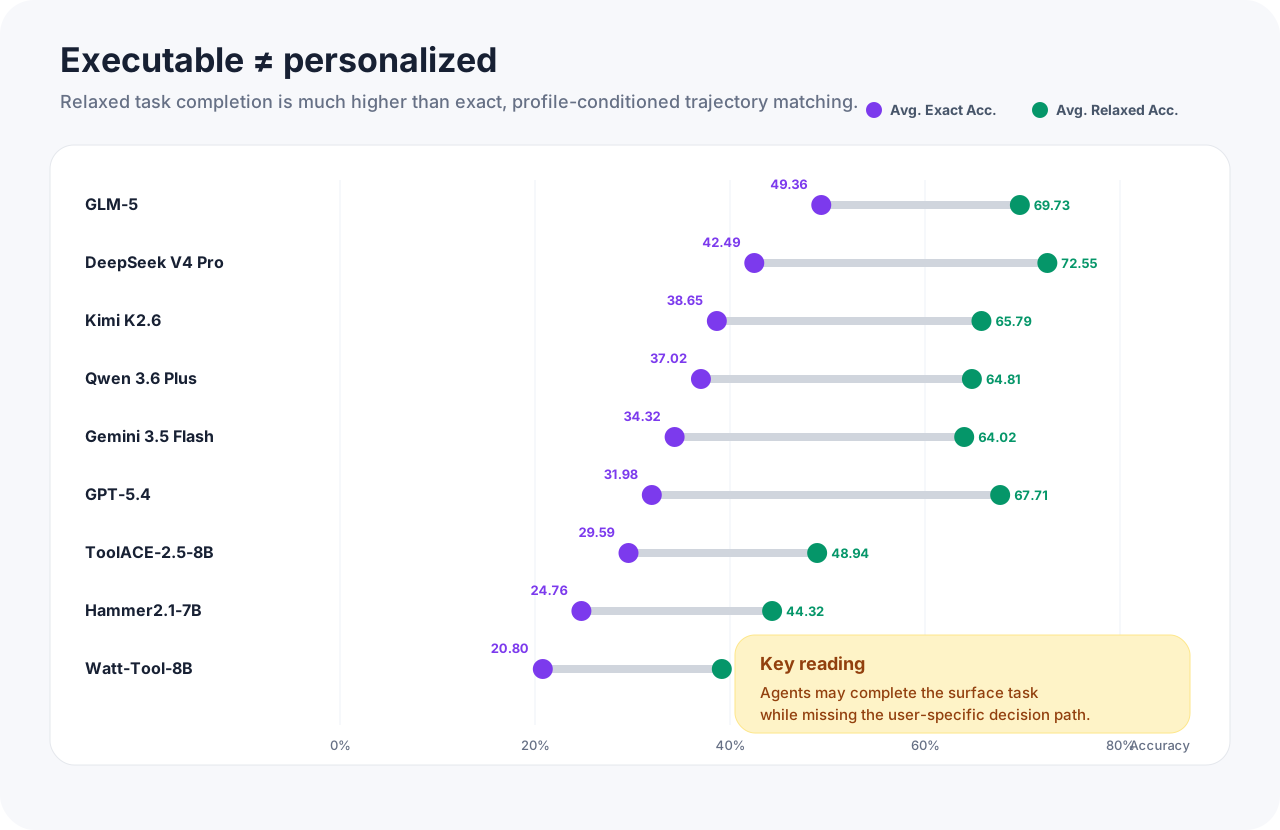
Generic task completion can look successful while still making the wrong decision for the user.
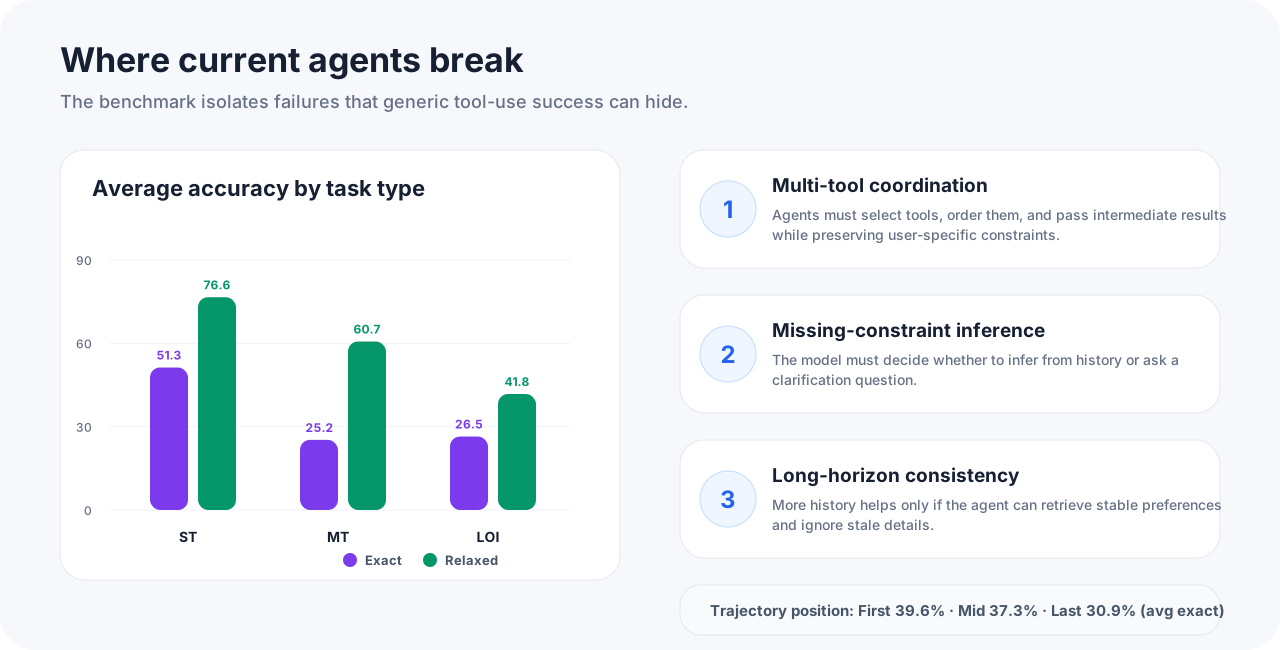
The best tested model reaches 49.36% average exact trajectory accuracy. Performance falls sharply on multi-tool coordination, and relaxed task completion substantially overestimates personalized alignment.
The repository includes multi-role trajectory synthesis, tool-call prediction, graph-aware execution matching, argument checking, and score aggregation.
git clone https://github.com/xxy212/UserToolBench.git
cd UserToolBench/utb
python -m venv .venv
source .venv/bin/activate
pip install openai python-dotenv tqdm

# See utb/README.md for generation and evaluation commands.
| Artifact | Status |
|---|---|
| Generation code | Available |
| Evaluation code | Available |
| Tool schemas | Available |
| Anonymous paper | Included |
| Sanitized benchmark data | Planned release |
@inproceedings{anonymous2026usertoolbench,
  title     = {UserToolBench: A User-Profile-Hidden Benchmark for
               Personalized Decision Making in Tool-Use LLMs},
  author    = {Anonymous Authors},
  booktitle = {Under review at EMNLP},
  year      = {2026},
  url       = {https://github.com/xxy212/UserToolBench}
}